
 By
By 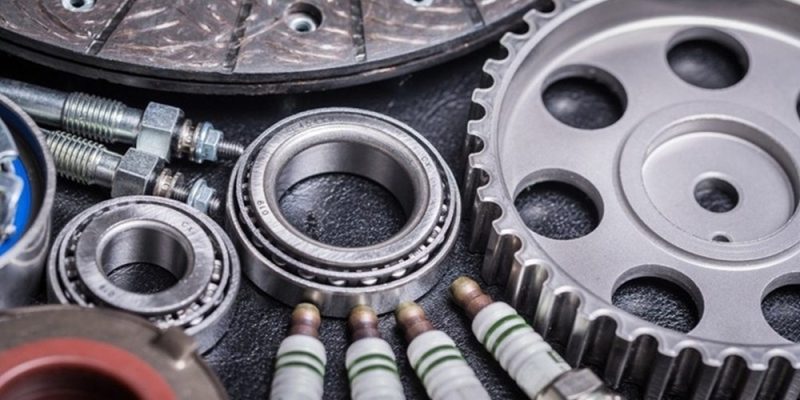
A reliable car parts supplier in Singapore serving the full breadth of makes and models on the road is an invaluable resource for both individual vehicle owners and professional workshops. Singapore’s vehicle population is notably diverse, spanning Japanese, Korean, European, and American marques across a wide range of model years. Sourcing quality components for this variety requires a supplier with genuine depth of stock and strong relationships across multiple manufacturer supply chains.
The Challenge of Singapore’s Diverse Vehicle Fleet
The Land Transport Authority’s data consistently shows that Singapore’s vehicle fleet is dominated by Japanese makes – Toyota, Honda, Nissan, Mazda, and Mitsubishi – but with substantial representation from Korean brands including Hyundai and Kia, and a significant European segment led by Volkswagen, BMW, Mercedes-Benz, and Volvo.
Each manufacturer operates different parts numbering systems, different material specifications, and different supply chain structures. For a car parts supplier Singapore operation to genuinely serve this diversity, it requires not just broad inventory but the technical knowledge to navigate the often complex relationship between vehicle model, production year, and the specific part number required for a given application.
Quality Considerations Across Different Vehicle Types
Quality requirements vary somewhat depending on the vehicle type and the component in question, but certain standards apply universally.
Japanese vehicles: Known for their engineering precision and the relatively wide availability of OEM-equivalent aftermarket parts. The aftermarket supply chain for Japanese models is mature and well-regulated, meaning that verified quality alternatives to genuine parts are available at accessible price points for most common applications.
European vehicles: Parts quality requirements are typically more stringent, reflecting both the engineering tolerances of European-designed vehicles and the higher cost of failure in premium marques. Genuine or OE-grade parts are more consistently recommended for European model servicing.
Korean vehicles: An increasingly sophisticated aftermarket supply chain has developed for Korean models, particularly as Hyundai and Kia have grown their global market share. Stock availability from specialist suppliers has improved significantly in recent years.
Classic and older vehicles: Parts availability for older model years requires a supplier with either deep stock holdings or well-established import channels. This is an area where relationships with specialist distributors and salvage networks become particularly valuable.
The Role of Part Number Accuracy
One of the most common sources of problems in automotive parts supply is incorrect part number identification. Vehicles that share a model nameplate across multiple generations, or that were produced in different configurations for different markets, may require different components despite appearing identical from the outside.
A knowledgeable car parts supplier in Singapore uses chassis numbers, engine codes, and production date information to verify the correct part number before fulfilling an order. This due diligence prevents the frustration and cost of returned parts and delayed repairs.
For workshops, this technical verification capability is a significant value-add. Time spent chasing incorrect parts is time that cannot be billed, and the disruption to scheduling affects customer relationships as well as workshop revenue.
Sourcing Parts for Performance and Modified Vehicles
Singapore has an active enthusiast community of vehicle owners who modify their cars for performance, appearance, or both. This segment of the market requires suppliers with access to aftermarket performance components alongside standard OEM and OEM-equivalent stock.
Performance parts including upgraded braking systems, suspension upgrades, engine management enhancements, and exhaust systems require a supplier with genuine product knowledge and relationships with reputable performance component manufacturers. Generic suppliers who stock these items without understanding the application requirements can create unsafe situations for vehicles operating at higher performance levels.
As Minister for Transport S Iswaran has noted about Singapore’s approach to road safety and vehicle standards, “Every component on Singapore’s roads must meet the standards that protect our drivers and other road users.” That principle applies as much to aftermarket and performance parts as it does to standard replacement components.
Building a Reliable Parts Sourcing Relationship
For workshops and fleet operators managing regular servicing requirements, establishing a consistent relationship with a car parts supplier Singapore operation offers practical advantages beyond the individual transaction:
- Simplified ordering processes through established account systems
- Consistent availability of commonly needed parts through agreed stock holding
- Access to technical support for challenging identification or application queries
- Priority service during periods of high demand
- Consolidated invoicing that simplifies accounts management
These operational benefits accumulate over time and represent a meaningful contribution to workshop efficiency and profitability.
Ensuring Quality Across the Full Transaction
Receiving quality parts is only part of the supply relationship. Quality packaging that protects parts during storage and transit, accurate delivery documentation, and reliable lead times for non-stock items are all dimensions of supplier quality that affect workshop operations in practical ways.
A parts supplier that delivers consistently across all of these dimensions – stock quality, technical accuracy, packaging, documentation, and logistics – is one whose value to a workshop goes well beyond the cost of individual components.
Choosing Wisely for Every Make and Model
For vehicle owners managing their own maintenance, the key is to understand what grade of part is appropriate for each application and to source from a supplier who can verify the provenance of their stock. For workshops building a long-term supplier relationship, the evaluation should cover technical knowledge, stock depth, operational reliability, and the supplier’s commitment to quality across their entire range.
Singapore’s vehicle fleet will continue to diversify as new marques enter the market and as electric and hybrid vehicles make up a growing proportion of new registrations. The suppliers best positioned to serve this evolving market are those investing in the technical knowledge, the supplier relationships, and the stock management capability needed to meet quality requirements across every make and model on Singapore’s roads.







Comments